Skip Navigation LinksHome Page > Visiting Shark Bay > Visitor Guide Interactive Map > Dirk Hartog Island

Dirk Hartog Island National Park  Map of Dirk Hartog Island

Introduction

Jutting out from the far western edge of the Australian continent lies remote and rugged Dirk Hartog Island, one of our most important historic sites. The island has a prominent place in Australian maritime history as it was visited by several notable European explorers, many of them well before Captain Cook and the First Fleet. The arrival of Dirk Hartog in 1616 marked the first European landing on Australia’s west coast, and he was later followed by other Dutch explorers including Vlamingh in 1697 and Englishman, William Dampier in 1699. Several Frenchmen followed the Dutch including St Alouarn in 1772 and Baudin in 1801.

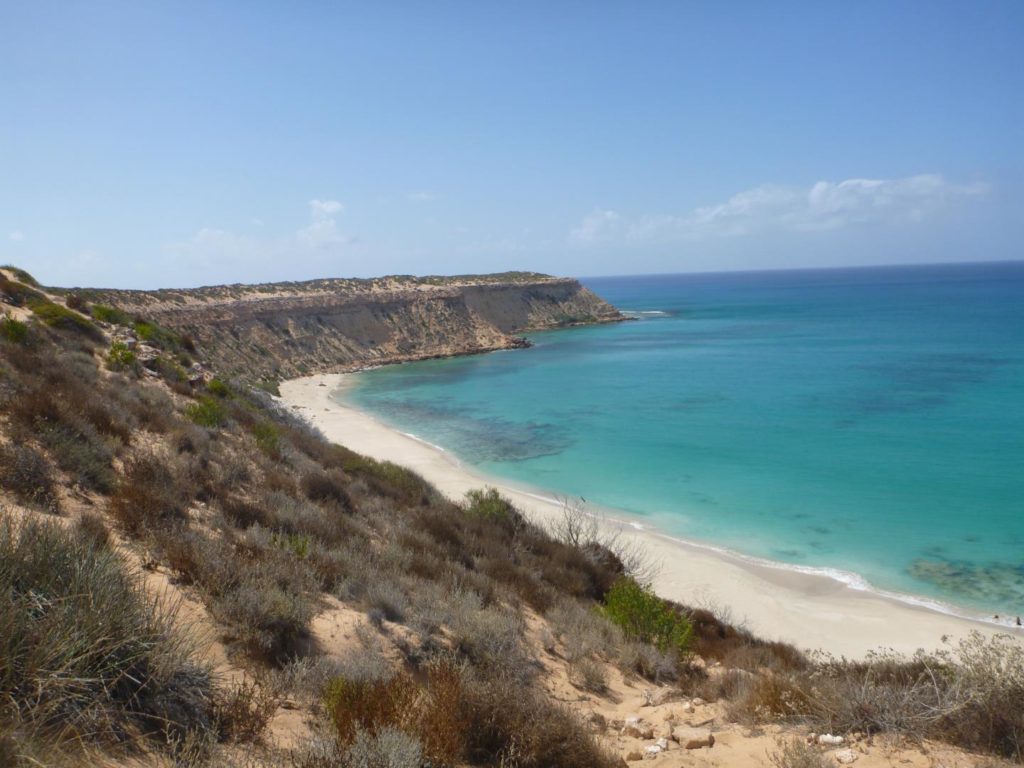
Steep cliffs on the island’s western side slope gradually eastward towards a low limestone coastline of shallow bays and secluded beaches. The vegetation is low, shrubby and harbours a surprising array of animal life from rare burrowing frogs to wrens found nowhere else in the world.

Today times are changing. The island’s recent history as a pastoral lease has come to an end and sheep grazing has made way for conservation. The island is now a national park  and the future looks bright for the island with bold plans underway to reintroduce some of the island’s rare mammals.

Who was Dirk Hartog? Click here to find out!
To find out more about Shark Bay’s maritime explorers click here.
 

Gecko - Nephrurus levis

Dirk Hartog Island

Dirk Hartog wildflower
The natural features of Dirk Hartog Island are varied and spectacular from small geckoes to wild coastal cliffs and minute wildflowers.

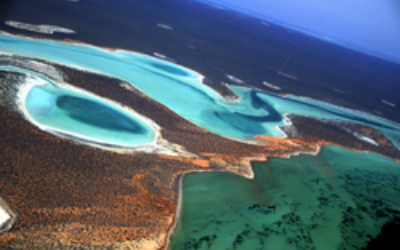
What does the eastern coastline of the island look like?

Click the image to start the video (2min 8sec).


Access

There are several ways to get to Dirk Hartog Island National Park including by vehicle barge, boat and plane. Note that both the barge and homestead accommodation only operate between the months of March and October, limiting access to the island during summer.

Dirk Hartog Island 4WD track

Dirk Hartog sand tracks
4WD tracks on Dirk Hartog Island
to rockier surfaces near the west
vary from soft sand tracks inland
coast.

By 4WD & Vehicle Barge

Travelling to the island via vehicle barge between Steep Point and the island is a popular method of transport, giving you the freedom to use your own 4WD on the island. Note this is a challenging 4WD experience there is a limit of 8 vehicles allowed on the island at any one time.

To access the barge you will need to travel to Steep Point via a rough 4WD track and then take the 20 min trip across to the southern tip of the island. The barge service only runs in the morning and is subject to weather conditions. Bookings must be prearranged through the Dirk Hartog Island Homestead. For more info on the barge service click here.

By Boat

Boat owners are welcome to visit the island either on a day trip, to camp or to stay at the homestead. Most people travel across from Denham, a journey of approximately 35km as the crow flies. During summer when strong southerly winds are the norm the journey may not be possible. Check local conditions and ensure you have all necessary safety equipment before crossing.
 
Charter boats are also an option and several companies in Denham offer this service. Costs vary depending on your group size. Visit the Shark Bay tourist information website for a list of companies and to make bookings.

Flying

Another option is to charter a small plane to fly to the island from the Denham airport. Charter flights can be arranged through the staff at the Dirk Hartog Island Homestead or through Shark Bay Air Charter.


Facilities

Aside from the commercial accommodation at the island’s homestead, facilities are limited to a few small fishing shacks dotted around the coastline. A small number of rugged 4WD tracks give access to these sites located mainly on the northern and eastern sides of the island.

There are six designated camping locations around the island with very basic or no facilities. The sites include Urchin Point, The Block, Withnell Point, Sandy Point, Louisa Bay and Sammy’s Beach. When camping you will need to bring everything with you. For full details of the facilities and accommodation on the island visit the homestead website.
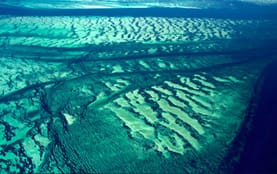
Dirk Hartog Island dunes
The spectacular dunes of Tetradon Loop on the eastern side of Dirk Hartog Island

Activities and highlights

The remoteness of Dirk Hartog Island has been a major attraction for the few visitors that venture out to the island each year.

Fishing

For many visitors the main interest is fishing, whether it be some of Australia’s best cliff based angling or boat based game fishing, there is something for all anglers. For full details of the fishing on the island visit the Dirk Hartog Island Homestead website.

Walking

Whilst no formal walking tracks are in place, walkers will find plenty of places to explore including secluded beaches, coastlines along cliff tops and vast sand dunes.
Cliffs on Dirk Hartog Island's western side
Cliffs on the western side of Dirk Hartog Island

Camping

A number of designated campsites are located around the coastline. Very basic shelters are available at some sites whilst at others you will need to be totally self-sufficient. Campers often choose their destination based on the proximity to a particular fishing site. Remember when choosing your site that the prevailing south-westerly wind can affect comfort levels.


Snorkelling and diving

Dirk Hartog Island offers some exceptional diving and snorkelling. Two marine sanctuaries protect patches of coral at Surf and Sandy Points, ideal locations for snorkelling and diving. A range of other diving sites featuring crystal clear water and relatively unspoilt marine environments can be found around the island. Keen and experienced divers might like to head for the rugged western coastline with its wild and untouched dive locations with abundant marine life, amazing caverns, and swim throughs.

Natural Highlights

Many of Dirk Hartog Island’s amazing natural features are easily accessible to the visitor. The west coast is a great place to feel the brute force of massive waves crashing into the limestone cliffs or to search for humpback whales as they migrate past during winter and spring. In some places the constant pummelling of the sea against the cliffs has eroded through the limestone forming unusual blowholes where spectacular surges of spray and water gush through when the swell is running.
 
View a 360 0 panorama of a Dirk Hartog Island blowhole here.
Turtle Bay on Dirk Hartog Island's northern tip
Turtle Bay

The many varied landforms of the island make great subjects for naturalists and photographers. The spectacular sand dunes near Tetradon Loop are a photographers dream and a short walk amongst the dunes at sunrise or sunset will provide plenty of opportunities for great photos. The east coast’s crescent shaped beaches are also great for exploring, with their ever-present range of seabirds and a wide variety of shells dotting the shoreline.
 

Rare wildlife such as the Dirk Hartog Island black and white fairy-wren and the sandhill frog, a species only discovered in 1976, are some of the animals that you may encounter on the island. Sea birds line the protected eastern coast, some species nesting on islands close to shore.

The waters around the island hold a teaming array of wildlife, much of which can be observed from a boat or whilst snorkelling and diving. Manta rays and even whale sharks can occasionally be seen around the northern coastline in May and June. Later in the year, when water temperatures drop further in the bay, dugongs travel to the warmer waters around the island.

Dirk Hartog Island Black and White Fairywren
Dirk Hartog Island black and white fairy-wren

Cultural Sites

Dirk Hartog Island is one of Australia’s most significant historic places. Cape Inscription, the site of Dirk Hartog’s famous first landing by a European in Western Australia back in 1616, is riddled with fascinating history. For hundreds of years many explorers visited the cape. Its prominent location, jutting out into the Indian Ocean, meant sailors who were blown off course were common visitors. Some of them left behind mementoes of their visit, hence the name Cape Inscription. To learn more about this fascinating history, visit our maritime exploration pages or even better make a visit to the World Heritage Discovery Centre in Denham.

At Cape Inscription there are few visible cultural remains, however the nearby lighthouse stands proud over the cape, as if to protect the deep history of this special site. Other visible historic features on the island are remnants of the pastoral history. Windmills and old shearing sheds are dotted around the island and the occasional fence line breaks up the arid landscape.

Dirk Hartog Island's lighthouse at Cape Inscription
Cape Inscription lighthouse
Dirk Hartog Island map

Map

For a map of the island's key sites and general 4WD track locations click here. Note that this map is not suitable for navigation purposes.
 

Fees

At present there are no Department of Environment and Conservation entrance fees for the island, however the homestead proprietors administer both the camping and barge fees (if you wish to take your vehicle over to the island). Access and camping fees for Steep Point are also in place and must be paid if you access this area in transit to the island. For the homestead’s current fee structure visit this site.

In the future a new fee structure will be introduced as the island’s transition to a national park occurs. Contact the DEC office in Denham for the current situation.


Take a Virtual Tour

360 panorama of Blowholes
360 panorama of Zuytdorp Cliffs
360 panorama of Cape Inscription
Audio of blowholes
Slideshow


Privacy Policy | Copyright 2009 Site funded by      
 
Links | Contact Us | Site Map | Search