Skip Navigation LinksHome Page > Home

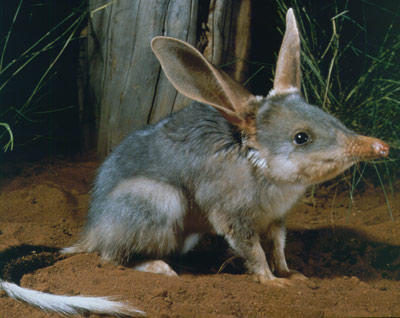
Rufous hare-wallaby or mala
Rufous hare-wallaby distribution map
Rufous Hare-Wallaby or Mala ( Lagorchestes hirsutus)

What do they look like?

Shark Bay is home to the rufous hare-wallaby ( Lagorchestes hirsutus) also known as the Mala. Rufous hare-wallabies have long, soft greyish-brown fur tinged with red, especially on the underparts. Females, which average 37.5 cm long and 1.7 kg, are larger than males, which have a combined head and body length of about 33 cm and weigh 1.6 kg. The mala’s long and relatively slender tail is shorter than its body.

Where do they live?

Mala were once widespread and abundant throughout the spinifex deserts of central and western Australia. By the 1930s, habitat destruction and the introduction of rabbits, foxes and cats had made them one of the rarest macropods in Australia. The last two wild mainland populations – totalling just 50 animals – were destroyed by fire and foxes in 1991. Luckily, prior to their destruction some of the animals were captured and bred in captivity. These captive-bred mainland mala survived and provided the source of several ‘fenced’ populations and a new population on Trimoulle Island in the Montebellos, off northwest Western Australia. The species is now extinct in the wild on the Australian mainland.

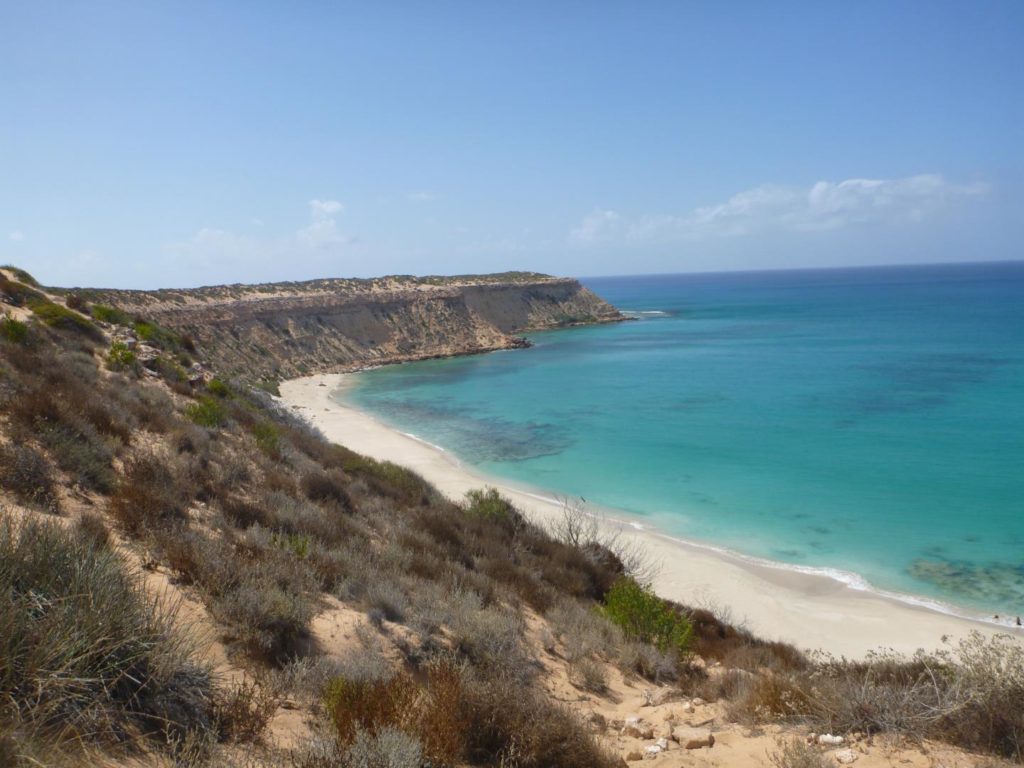
Today, the only original wild populations of mala left on Earth are found on Bernier and Dorre Islands, in the Shark Bay World Heritage Area. These two islands have been separated from the mainland for over 8000 years due to an increase in sea level. As a result the island mala populations are different in size, appearance and behaviour from the mainland populations. The island mala were once considered to be two separate subspecies, but they are now viewed as just variations of the mainland mala.

Relatively solitary animals, mala live in low scrub and spinifex on sandy soils. They come out at dusk to feed on grasses, seeds, bulbs and even insects during the drier months. During the day they shelter in a ‘squat’, a shallow trench or scrape in the ground under a low shrub or spinifex hummock. When frightened from their squat they escape in an explosive zigzag burst of speed, often uttering a high-pitched nasal squeak!

The female can breed when she is just 5 months old and can produce up to three young a year! The young, called a joey, is carried in her pouch for about 15 weeks, and weaned at about 5 months of age. Like other kangaroo species the mala can have more than one young at the same time. The female can delay the development of a fertilised egg (called ‘embryonic diapause’) if she has a joey in her pouch. The embryo is ‘reactivated’ if the joey dies, or is almost old enough to leave the pouch.

Any threats to their survival?

The mala of Bernier and Dorre Islands are vulnerable to extinction. Their isolation means that frequent or extensive bushfires and introduced predators could wreak havoc on the population. Because they have been isolated for thousands of years, they are inbred and unsuitable for reintroduction to the mainland. Instead, mala from the captive mainland population were brought to Shark Bay in 1999 to be bred in Project Eden’s Captive Breeding Centre.

Mala will be introduced to Dirk Hartog Island as part of the ecological restoration project for the island. For more information about this project see Return to 1616.

For more information about Western Australian wildlife check out the WA Museum Fauna Base website.

pdf icon Click here to download a printable PDF of this fact sheet.


Privacy Policy | Copyright 2009 Site funded by      
 
Links | Contact Us | Site Map | Search